What a turning basin is, and why its footprint moves before any berth gets announced
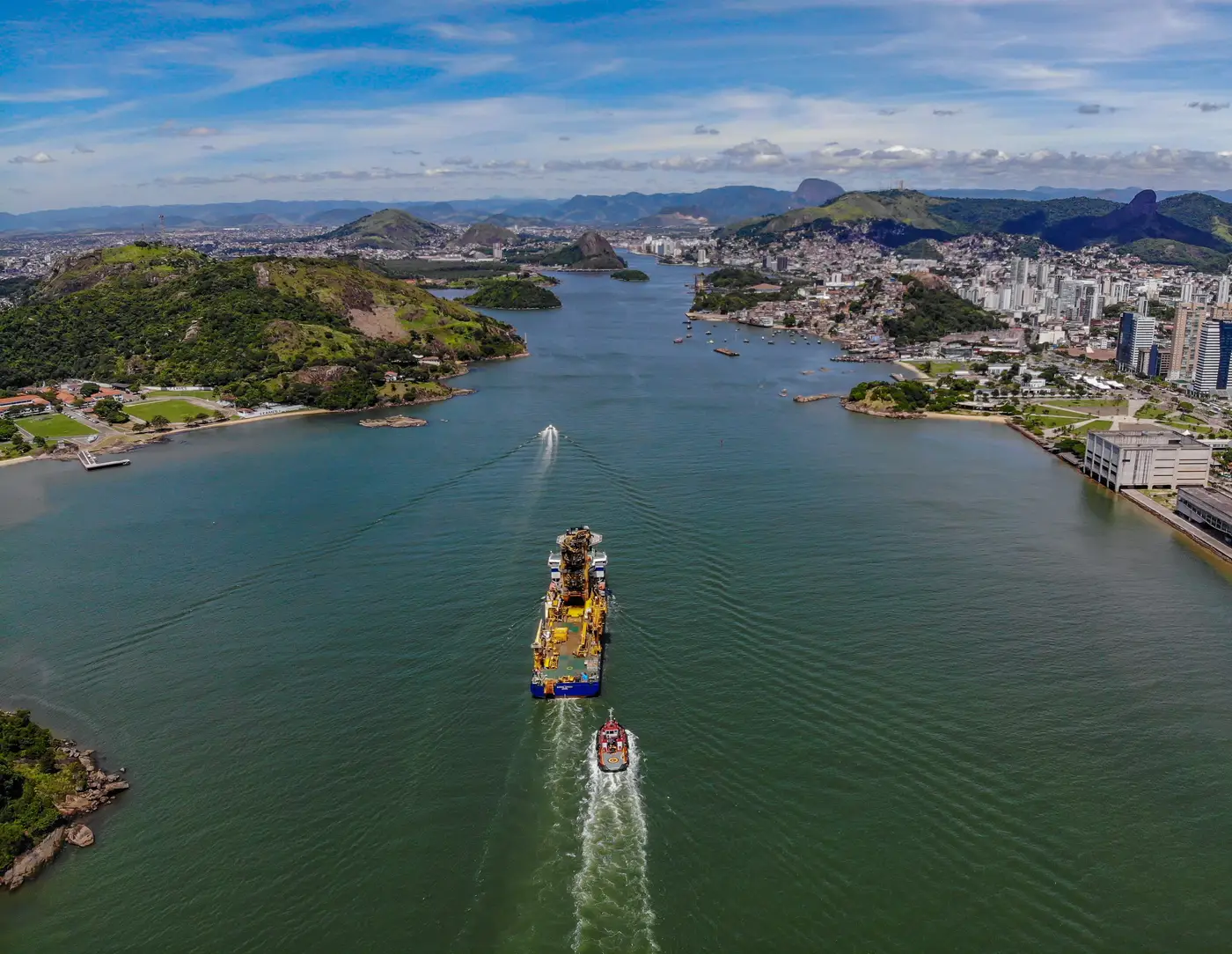
A turning basin is the widened, deepened stretch of water where an inbound vessel swings itself around to come alongside a berth bow-first, or to point back out to sea after loading. The berth pocket is the narrower slot against the quay wall where the ship ties up. The basin is the maneuvering room next to it, sized to let the design vessel rotate without a tug shoving it sideways through mud.
Get the terminology straight and the rest follows. A channel gets you to the port. A turning basin lets you turn once you're there. A berth pocket is where you stop. Three different dredge footprints, three different survey signatures, and they don't all get excavated on the same schedule.
Why the basin gets dug before the announcement
Port authorities dredge a turning basin against engineering drawings and environmental approvals that get finalized well before any lease or operating agreement is signed. The diameter is set by the design vessel, the ship class the terminal is being built to handle, and that figure comes out of the approvals process long before a berth has a named tenant. Those approvals move through a capital works pipeline on their own timeline, and dredging contractors mobilize against the drawings as soon as permits clear.
So what you see from the water or from imagery is a hopper dredger or cutter-suction rig working a circle or elongated oval adjacent to where a quay wall is going up, months before anyone confirms which operator the berth is for. The basin dimensions are often the first hard evidence of vessel class intent. A basin sized for a feeder containership looks different on a bathymetric survey than one sized for a capesize bulker or an LNG carrier, and that difference shows up in excavation footprint well before any tenant is named.
This is the gap: engineering commits to a swing radius, dredging starts cutting it, and the operator announcement trails by a quarter or two while contracts, financing, and operational details get worked out behind closed doors. If you're tracking the port by press release, you're reading last quarter's dredging as this quarter's news.
Reading turning basin excavation from imagery
A turning basin under construction has a distinct signature even without ground truth. The dredge footprint is roughly circular or oval, sitting adjacent to the channel centerline rather than along it, and it grows outward pass by pass as spoil gets lifted and barged off. Compare that against channel widening, which reads as a long rectangular deepening running parallel to the existing channel axis, usually tied to accommodating a wider beam vessel class on the approach rather than a turning maneuver.
Spoil disposal is the tell that ties the two together. Material cut from a turning basin excavation has to go somewhere, and watching the spoil ground grow quarter over quarter, rather than guessing from a dredging permit filing, is the more reliable way to confirm the project is actually progressing versus stalled in permitting. A basin that's been staked out on paper but not yet excavated won't show spoil accumulation anywhere nearby.
None of this is visible in a single image. It's the comparison between passes that shows a basin edge creeping outward, a spoil ground gaining area, or a berth line extending along the quay, which is exactly the kind of quarter-over-quarter change layer worth keeping on hand instead of rereading operator statements for hints. If you're tracking several ports at once and don't want to be the last to notice a basin's been widened, Port Monitoring sets each quarterly pass against the last one automatically so the dredge footprint, not the announcement, is what tells you a berth is coming.
Next time a port authority puts out a notice for a new terminal, check the dredging history on the turning basin next to it first. The announcement is confirmation. The basin dimensions were the signal.