What is a cofferdam, and why it shows up before new berth construction
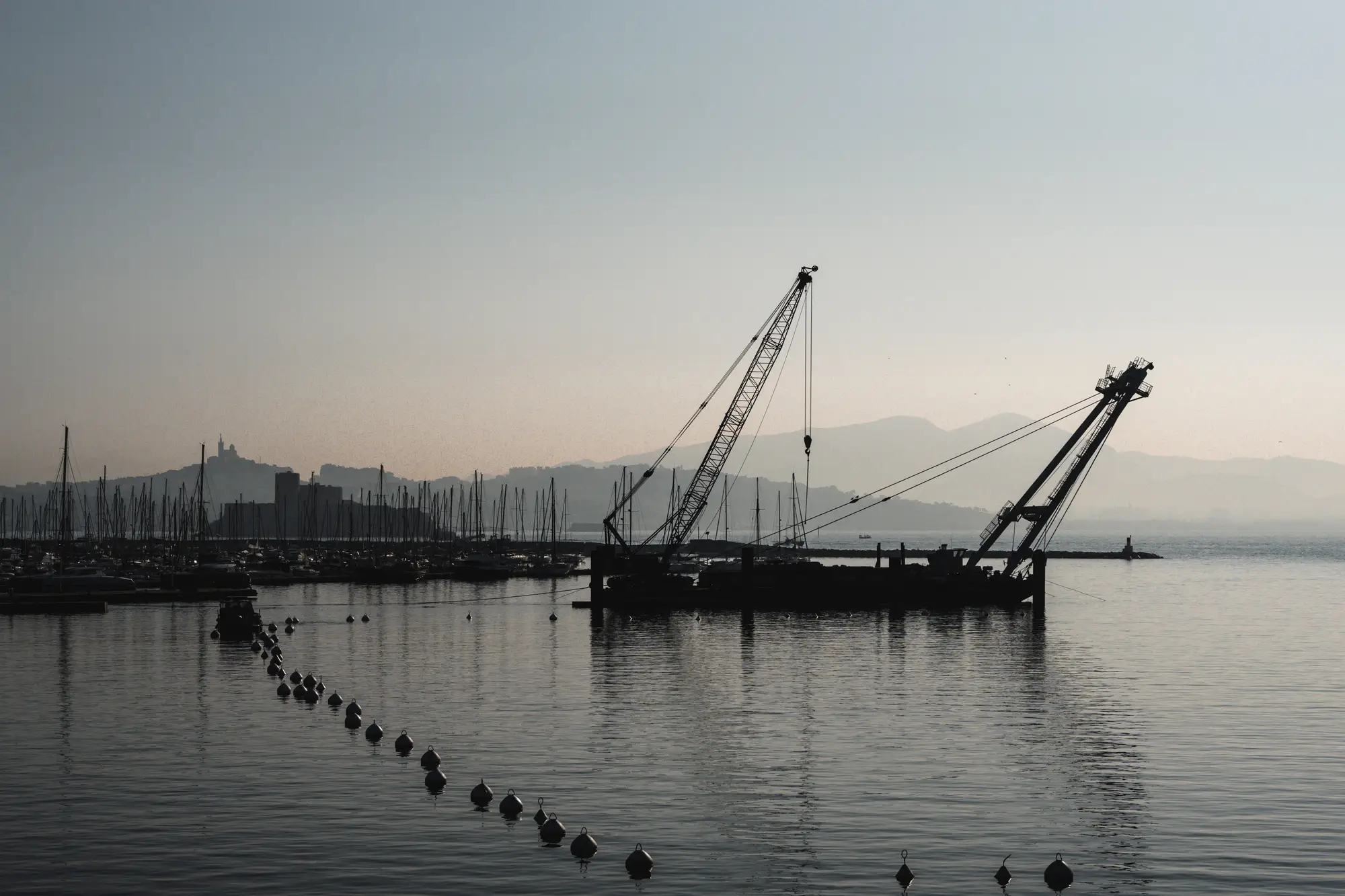
A cofferdam is the first thing you see before you see a berth.
Before any quay wall gets poured, before a single bollard goes in, somebody has to build a dry box in the water. That box is the cofferdam. It's a temporary watertight enclosure, usually interlocking sheet piles driven into the seabed, sometimes an earth or rock berm, that lets a contractor pump out the water inside and work on foundations, quay structures, or pile caps as if they were on dry land. Once the permanent structure is finished and can stand on its own against tide and wave loading, the cofferdam comes out, or in some cases it gets left in place and buried under the new reclaimed fill.
That sequence, dam first, dry work second, permanent structure third, is why a cofferdam is one of the most useful things to catch early in any quarterly pass over a berth expansion site.
Why contractors build one before the berth line moves
Berths don't get built the way a seawall on dry land gets built. The working face sits where water used to be, and you can't form concrete, place piles, or drive sheet steel properly through water, turbidity, or tidal swing. The cofferdam solves that by converting a strip of harbor into a construction pad. Inside it, crews dewater, excavate to design grade, pour footings, place piling, and build the wall section that will eventually become the new berth face or the retaining structure behind a reclamation fill.
This is also why a cofferdam almost always shows up before the headline change you're tracking, whether that's a berth line extension, a new quay apron, or the start of land reclamation. The dam is staging. The berth is the output.
What it looks like in a satellite pass
In a high-res RGB pass, a cofferdam reads as a thin linear or curved feature sitting in open water, often following the planned new berth alignment rather than the existing one. A few tells:
- A visible color break where the water inside the enclosure turns darker or more turbid than the surrounding harbor, from dewatering pumps stirring up sediment
- A straight or gently curved line of piling that doesn't match any existing quay, breakwater, or jetty on record
- Barges, cranes, or a work platform parked right against that line, which likely won't be there on the following pass once the dry work wraps
- No fill or paving behind the line yet. If reclaimed material is already placed, the cofferdam phase is probably done and you've missed it between passes
On a single image this can be easy to misread as early breakwater work or a temporary mooring dolphin. It's the comparison against the prior quarter that tells you the feature is new, that it's linear, and that it sits ahead of the current berth edge. That's the pattern worth flagging before the operator puts out any press release about the expansion.
Why this matters for tracking the project, not just naming it
A cofferdam sighting is a leading indicator. If you're watching a terminal expansion and the only thing you've got is the operator's own timeline, you're working off whatever they choose to publish, which tends to run behind construction and sometimes skips the staging phases entirely. Catching the cofferdam in a quarterly comparison gives you a dated marker: dry work started here, around this time, ahead of the berth line moving. Watch the next pass or two and the enclosure usually disappears, and the permanent quay face, or the first strip of reclaimed fill, takes its place.
That's the kind of before/after read Port Monitoring is built around: a change layer between two quarterly passes that flags new linear features, fill growth, and berth line shifts without waiting on anyone's announcement.
If a cofferdam just turned up on your last pass over a site you're tracking, it's worth putting that site on a quarterly watch starting now.